The Spiral Continuum · Timeline
The Seven Playings
Seven sites, seven voices, twenty-two seconds at the doorway of a chamber in Lisbon's eighth hill
Location. Seven sites simultaneously — Catania, Trabzon, Buriti, the Andean chamber, Cabeceiras de Basto, São Vicente (Lisbon), and the Lapa kitchen
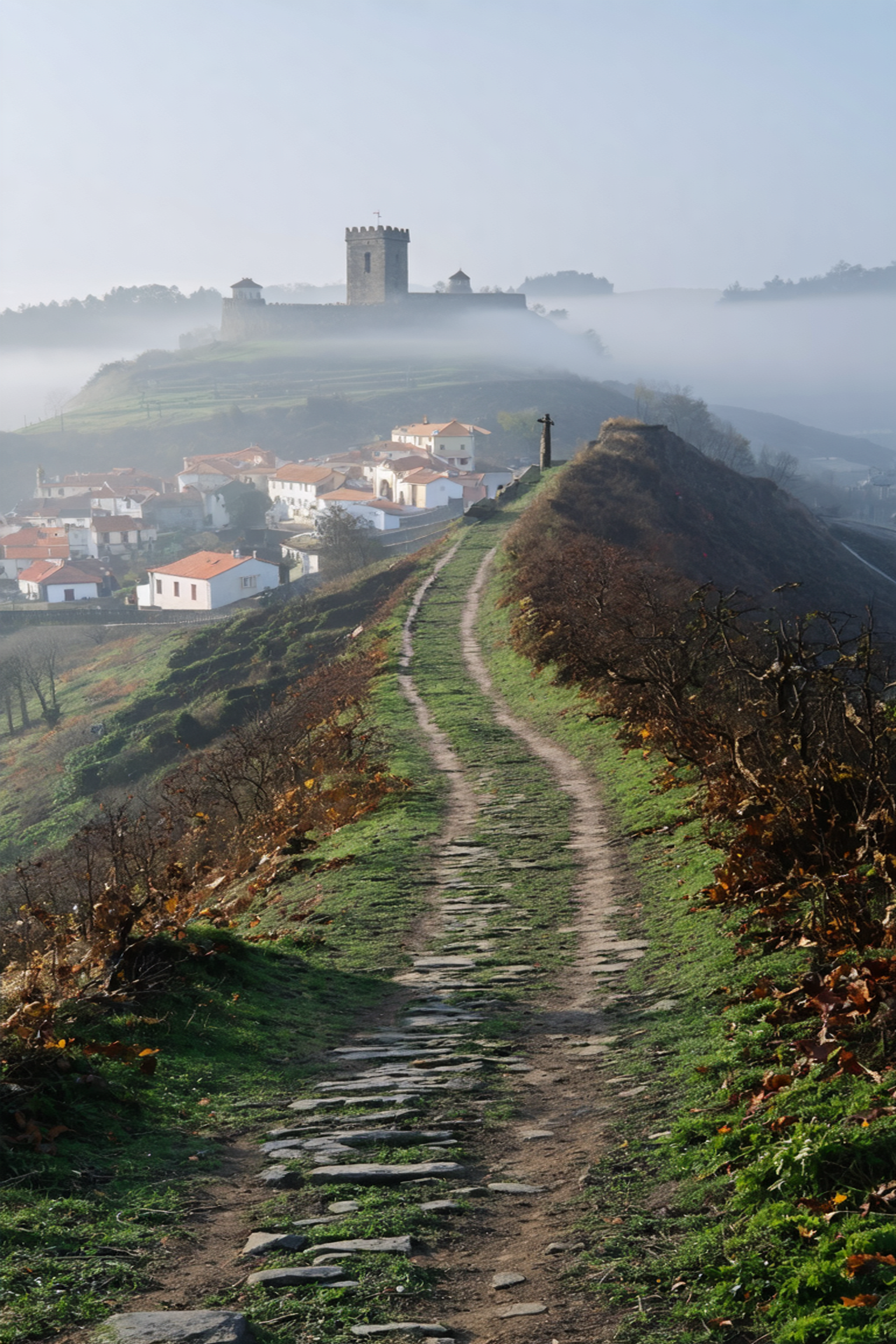
Mariana hand on path-marker 22 minutes; weeps freely first time since 1967.
The atlas has finished writing. Seven words, on seven plates, across five months — Espera. Conta. Lembra. Junta. Olha. Caminha. Pergunta. Wait, count, remember, gather, look, walk, ask. The seventh word landed inside the symbol of the small monastery in Cabeceiras de Basto on a Wednesday in October.
The instruction is implicit. The instruction is not legible. It will be carried out anyway.
At 12:04 UTC, southern solstice, in seven places simultaneously, seven keepers hold the line.
Catania at 13:04 local. Carla Esposito, who has been custodian of the bronze bowl since 1996, lays her hand on the lip. Under her hand the bowl modulates for three seconds at 17.9 Hz. The frequency is the Catania harmonic. The three seconds are the only instrumental evidence of the working that any government or foundation will, in the years to come, be able to point at.
Trabzon at 15:04 local. Selim Karaca is in the olive grove. He has buried the flash-drive that holds the master recording at the foot of the third tree on the western terrace. He stands beside the tree for the duration of the working. He does not pray.
Buriti at 09:04 local. Tê Albuquerque sits at Rosália Nogueira’s kitchen table. The alpaca cloth — Mama Killa Tika’s cloth, sent up the Andean spine in 1951, lent for the day — is laid flat. Rosália’s elder sister, age ninety-one, sits beside Tê. She speaks aloud the four Tupi words Rosália spoke for Aurora on 24 July 1948. Pirá-tatá’s last sentence on the cool floor of the rainforest. The words are the same words. The kitchen is the same kitchen. The wood of the table is older than the kitchen.
The Andean chamber at 08:04 local. Inês Coutinho stands at the chamber’s entrance. Q’illu Mama is inside the chamber, in the dark. Inês recites the question. Q’illu Mama replies in Quechua, off the recording, in a sentence Inês will not write down. The reply takes seventeen seconds.
Cabeceiras de Basto at 12:04 local. Mariana lays her hand on the 1849 path-marker stone at the third bend. The stone is wet from morning rain. The marker reads A linha continua aqui in five-word cuts so deep no rain in any century has erased them. Mariana keeps her hand on the stone for twenty-two minutes. She weeps for the first time since her mother died in February 1967. The weeping is steady, freely, with no embarrassment, no count. It runs the full twenty-two minutes.
São Vicente at 12:04 local. Maya sings the seventh mode in the south alcove. Daniel stands at the cloister door, lucid for the duration of the song. Aníbal Soares is at the gate. The seventh mode is four notes. The four notes are the four syllables of Pirá-tatá’s last sentence in Tupi.
Lapa at 12:04 local, running to 12:26. Cassandra at the long kitchen table. The atlas open. The line-transmission notebook in front of her. She writes — not what she is hearing, because she is not hearing — but what she is being given to write. Twenty-two minutes. The handwriting is hers and not hers; the rhythm of the strokes is the rhythm of Mariana’s pulse, which Cassandra cannot in any rational sense be feeling, but which the page on her kitchen table records as a steady mid-tempo for the full twenty-two minutes.
At 12:26 the seven workings close. Carla lifts her hand from the bowl. Selim walks out of the olive grove. Tê folds the alpaca cloth. Inês steps back from the chamber. Mariana stands up from the path-marker. Maya stops singing. Cassandra closes the notebook.
The line has been on for twenty-two minutes.
The seven keepers do not, on this morning, know what has just been carried.
What has just been carried is the address of the audience-name.
Two days later, on Christmas morning, Mariana does not wake.
Six days later, on the title page of the atlas — the first plate, which had no map — twenty-three letters in eleven sigils, in an alphabet predating Phoenician, arrive.
The audience identifies herself.
She has been waiting since the beginning of the rains.
⊕ Characters present
| Name | Role | Age |
|---|---|---|
| Carla Esposito | Catania (13:04 local) — bronze bowl modulates 3 sec at 17.9 Hz | — |
| Selim Karaca | Trabzon (15:04 local) — olive grove | — |
| Tê Albuquerque + grandmother | Buriti (09:04 local) — cloth on table; Pirá-tatá's four Tupi words spoken | — |
| Inês Coutinho + Q'illu Mama | Andean (08:04 local) — Inês recites the question; Q'illu Mama replies in Quechua, off-recording | — |
| Mariana Pacheco Coutinho | Cabeceiras de Basto (12:04 local) — hand on path-marker 22 minutes | 98 |
| Maya Cohen-West-Torres | São Vicente (12:04 local) — sings the seventh mode in the alcove | — |
| Cassandra Veyra | Lapa (12:04–12:26 local) — at the kitchen table with the atlas and the line-transmission notebook | — |
| Daniel Cohen-West-Torres | São Vicente — at the cloister door | — |
| Father João Almeida (modern) | São Vicente — at the gate (Aníbal); Lapa later | — |
⫢ Objects present
| Item | Provenance & note |
|---|---|
| The atlas | open on Cassandra's kitchen table; the seventh Portuguese word has landed inside the Cabeceiras monastery symbol |
| The line-transmission notebook | Cassandra writes in it during the 22 minutes |
| The bronze bowl, Catania | Carla holds it; it modulates 3 seconds at 17.9 Hz under her hand |
| The 1849 path-marker stone | Mariana lays her hand on it for 22 minutes; the longest unbroken contact of her life with anything |
| The alpaca cloth, on Tê's table at Buriti | Mama Killa Tika's red-cochineal alpaca, returned home for the day |
☰ Books covering this event
| Volume | Title | Role |
|---|---|---|
| Book 3 | The Seventh Pattern | primary — Chs.29–35 |
∿ Where this sits in the era
The bright marker is this entry. The other markers are the other canonical events in the same era of The Spiral Continuum.