The Spiral Continuum · Timeline
The Singing
Pirá-tatá's death at the upper Rio Negro plateau
Location. Igarapé Sete plateau, upper Rio Negro, Brazilian interior
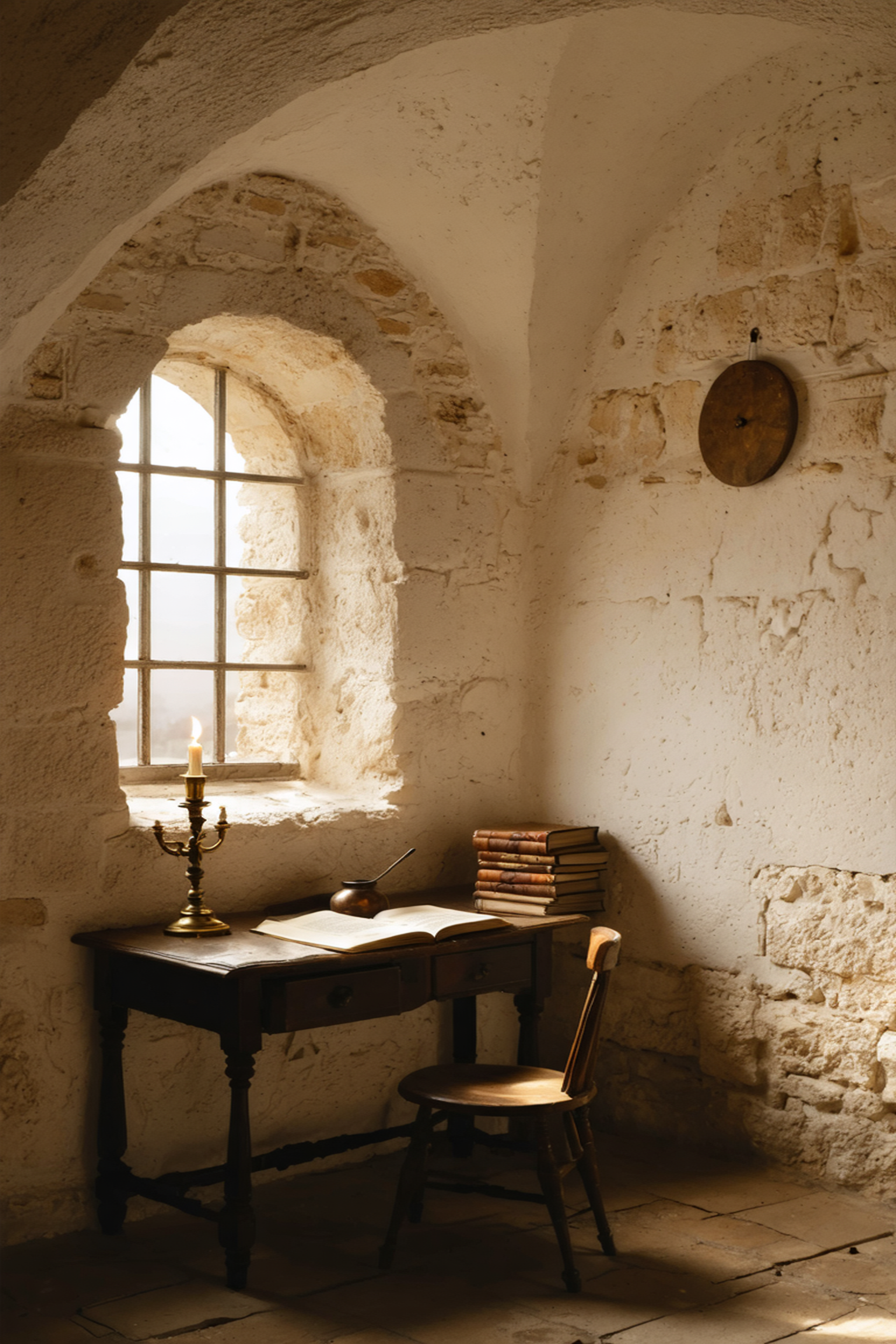
Audivi, intra caput meum, vocem quae vox non erat. Vox mihi cognitionem obtulit quam non petieram. Recusavi. Recusationes meas, ex illa hora, in singulis horis numero.
Tuesday in the rains, late afternoon into night. The five days of riverbank, the eleven-stone ring, and the cave are behind them. Pirá-tatá has waited for this clearing since long before Almeida was a priest.
He raises his hands at the central stone. Acuti is at the bone flute. The singing is not music in any sense the Portuguese ear recognises; it is something prior to music, something closer to the count of breath in a cool room.
Almeida is offered knowledge. He refuses three times. The first refusal is in Latin: non. The second is in Portuguese: não. The third is in Tupi: aãni — and in the verb cendub, the kind of listening that changes the listener.
Pirá-tatá folds painlessly to the cool floor of the rainforest. He dies without pain. Acuti does not move. Almeida understands, eight or ten seconds late, that the singing was the dying.
What Almeida writes that night, in the small commonplace book he carries in his cassock pocket, is the sentence that will define the rest of his hundred-and-fifteen-year life:
Audivi, intra caput meum, vocem quae vox non erat. Vox mihi cognitionem obtulit quam non petieram. Recusavi. Recusationes meas, ex illa hora, in singulis horis numero.
He counts his refusals every hour, after the hour at which he learned to count them, for eighty-five years.
The next morning Acuti will cut the chip from the central stone and carve two words into a hardwood plank Pirá-tatá had prepared the day before. The plank will sit in Almeida’s cassock pocket for seventy-eight years, in a Cabeceiras parlour cupboard for fifty, on a Buriti shelf for another seventy. Pirá-tatá’s last sentence in Tupi will, in 2026, return to the line in a Lisbon kitchen.
But that is later. On this night, on the cool floor of the rainforest, what the priest knows is that he has not been killed, and that something has been asked of him that he has chosen not to do.
⊕ Characters present
| Name | Role | Age |
|---|---|---|
| Padre João de Almeida | the priest | 28 |
| Pirá-tatá | Tupinambá elder (dies after the singing) | — |
| Acuti | Pirá-tatá's nephew, successor | young adult |
| Cabo Joaquim Mendes | Portuguese soldier (flees west the next morning) | — |
| Cabo Sebastião Ferreira | Portuguese soldier (killed by Acuti at the river) | — |
⫢ Objects present
| Item | Provenance & note |
|---|---|
| The eleven sigils | transcribed by Almeida on the central tallest stone |
| The central stone | tallest of thirteen standing stones in the open clearing |
| Pirá-tatá's bone flute | Acuti at the bone flute through the singing |
☰ Books covering this event
| Volume | Title | Role |
|---|---|---|
| Book 4 | The Cipher of Origins | primary — Ch.13 |
| Book 2 | The Seven Knots | the chamber rediscovered |
∿ Where this sits in the era
The bright marker is this entry. The other markers are the other canonical events in the same era of The Spiral Continuum.